

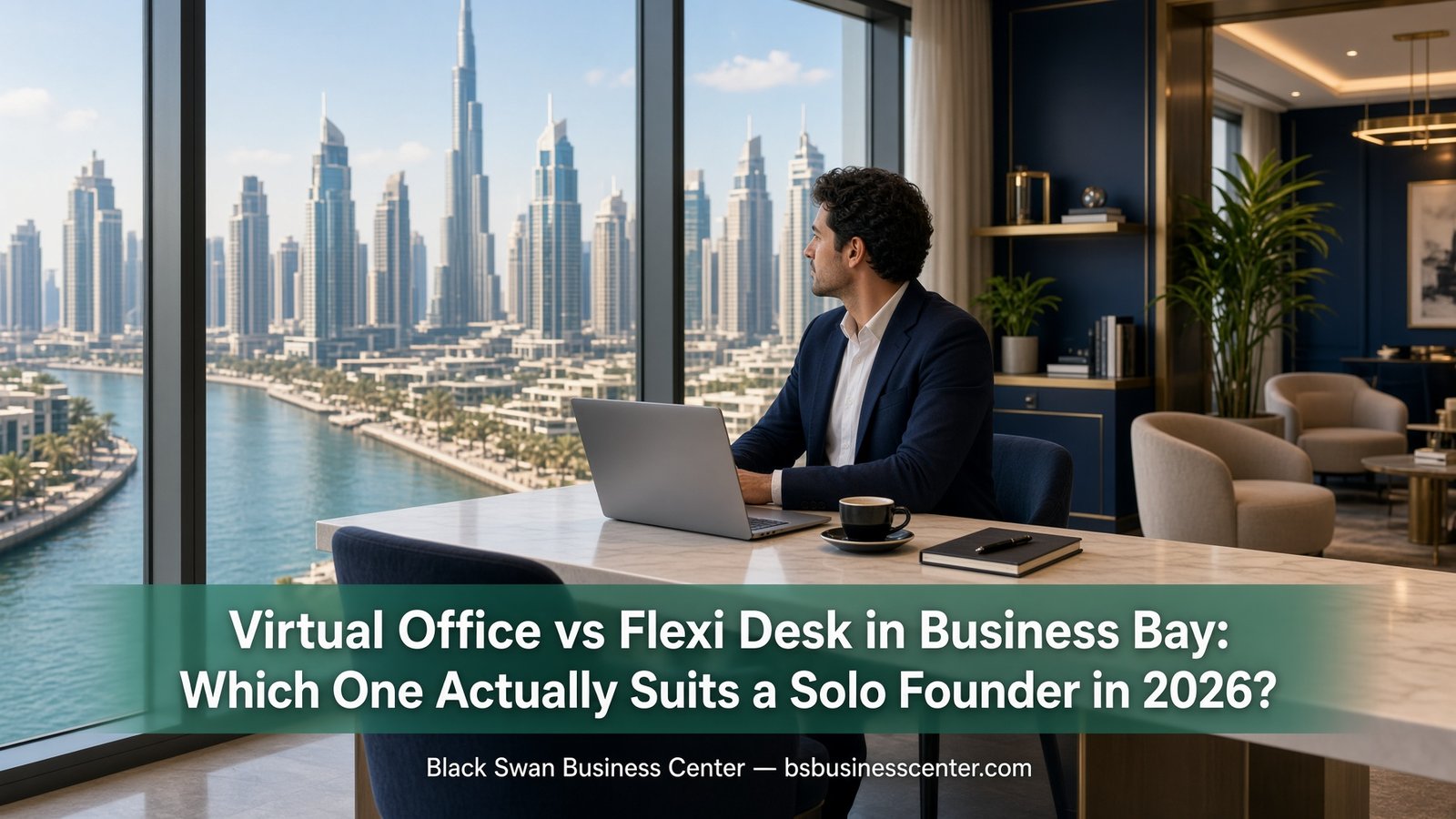
Solo founders ask me this almost daily, usually somewhere between finishing their business plan and actually signing a license: virtual office or flexi desk? Both get you a legitimate Business Bay address, both work with your trade license, and on paper they look almost identical. In practice, the difference comes down to one question most people forget to ask themselves before they sign: how many visas do you actually need?
What Each Option Actually Gives You
| Feature | Virtual Office | Flexi Desk |
|---|---|---|
| Registered business address | Yes | Yes |
| Ejari tenancy contract for licensing | Yes | Yes |
| Physical desk to work from | No, or very limited | Yes, shared workspace access |
| Mail handling | Yes | Yes |
| Meeting room access | Usually limited or paid add-on | Usually included, bookable hours |
| Visa capacity | More limited | Generally stronger |
| Best for | Founders who work mostly remotely | Founders who want somewhere to actually go and work |
If You Genuinely Never Need to Come In
A virtual office suits founders whose business is already fully remote: consultants who meet clients at their offices, e-commerce sellers running everything from a laptop, or anyone with a home setup they’re already happy working from who just needs the registered address and mail handling to satisfy licensing requirements.
The trade-off is visa capacity. Because there’s no dedicated physical desk tied to the package, virtual office setups typically support fewer visas than a flexi desk, which matters even for a solo founder if you’re planning to sponsor your own residency visa through the company, let alone hire anyone down the line.
If You Want Somewhere to Actually Work
A flexi desk gives you a real seat in a shared workspace, which matters more than people expect in the first year: client calls without the background noise of home, a professional space to bring someone for a coffee meeting instead of a café, and simply somewhere to physically separate “work” from “home,” which most solo founders underestimate the value of until they’ve been working from their kitchen table for six months.
It also tends to come with a stronger visa allocation than a virtual office package, since there’s a genuine desk tied to the license, useful even for a one-person company if a second hire, freelancer, or business partner is anywhere on your radar for the next year.
What This Looks Like in Practice at Citadel Tower
- A flexi desk gives you access to the shared workspace floors, high-speed WiFi, printing and scanning, and bookable meeting rooms, the basics that make “coming into the office” worth doing rather than a hassle.
- A virtual office package still gets you the Citadel Tower, Business Bay address for your Ejari and trade license, with mail handled for you, plus access to meeting rooms and the mini hall when you do need to bring someone in for a proper conversation.
- Both sit two minutes from Business Bay Metro Station, which quietly matters more than people admit when you’re commuting in occasionally rather than daily, no need to think about parking for a two-hour visit.
The Question That Actually Decides It
Not “which is cheaper”, over a year the difference is often smaller than people assume once a virtual office package needs meeting room add-ons later on. The real question: will you, realistically, want a desk to sit at more than once or twice a week? If yes, start with a flexi desk. If you’re confident the answer is genuinely no for the next 12 months, a virtual office is the leaner choice, and upgrading later, once you actually know, is straightforward.
A More Complete Cost Picture Over a Year
Comparing sticker prices side by side rarely tells the full story. A virtual office often looks cheaper month to month, but if your business genuinely needs client meetings, that saving can quietly disappear into paid meeting room add-ons, or worse, into lost credibility from meeting clients somewhere less professional instead. A flexi desk’s slightly higher monthly cost usually already includes meeting room hours, WiFi, printing and a proper place to work, so the real comparison isn’t the base price, it’s what you’d end up paying for, or doing without, to match that with a virtual office over twelve months.
What Founders Often Get Wrong When Choosing
The most common mistake is choosing based on where the business is today rather than where it’ll likely be in six months. A founder who signs a virtual office package purely to save money in month one, then hires their first team member in month four, often ends up paying an upgrade fee and dealing with a mid-year license amendment they could have avoided by starting one tier up. If hiring within the next year is even a possibility, it’s worth weighing that against the short-term saving before committing.
A Note for Founders Who Travel Frequently
If your work involves regular international travel, a flexi desk’s value shifts slightly, you’re not paying for a seat you’ll use every single day, but for a reliable base to land at between trips, somewhere your mail, meetings and paperwork are handled consistently whether you’re in town for two days or two weeks. For this profile specifically, the flexi desk’s stronger visa allocation and included meeting room access tend to matter more than the virtual office’s lower monthly cost.
Where to Go From Here
Both options are easy to see in person before you decide, and honestly, walking the floor for ten minutes tends to answer the question faster than any comparison table. Black Swan Business Center is on the 20th and 25th floors of Citadel Tower, Marasi Drive, Business Bay — call the team on +971 4 449 6800, or head to bsbusinesscenter.com to book a visit and see both setups for yourself before you sign anything.
Frequently Asked Questions
1. What’s the main difference between a virtual office and a flexi desk?
A virtual office gives you a registered address and mail handling with no dedicated desk; a flexi desk includes an actual shared workspace seat.
2. Which option supports more visas?
A flexi desk generally supports a stronger visa allocation than a virtual office, since it’s tied to a genuine physical desk.
3. Can I use a virtual office for my trade license and Ejari?
Yes, both virtual office and flexi desk packages typically come with a valid Ejari tenancy contract for licensing purposes.
4. Is a flexi desk worth it if I work alone?
Often yes, if you want a professional space to work and meet clients, and expect to need more than one visa within the next year.
5. Can I upgrade from a virtual office to a flexi desk later?
Yes, moving from a virtual office to a flexi desk, or a private office, is a straightforward upgrade once your needs change.



Join The Discussion