

In Dubai, speed isn’t a nice-to-have. It’s the baseline. And whether you run a startup, manage a sales team, or consult with clients across time zones, two things quietly decide how productive your day feels: high-speed internet and meeting rooms you can actually rely on.
That’s exactly why modern coworking spaces (especially in a busy district like Business Bay) have evolved beyond “a desk and a coffee machine.” Today, a good coworking space is more like a mini business hub: it delivers fast Wi-Fi, stable connectivity, smart IT support, and professional meeting room access—without you dealing with the cost and chaos of setting everything up alone.
Below is a practical, real-world breakdown of how coworking spaces make that happen, what to look for, and how professionals use these facilities daily at places like Black Swan Business Center – Business Bay, Dubai.

Why High-Speed Internet Is the #1 Coworking Amenity
Let’s be honest—almost every job today is an internet job. You might be on Zoom, pushing designs to the cloud, running ads, uploading video content, syncing accounting software, or managing a CRM. So, when the internet drops, your work doesn’t “pause.” It breaks.
At home, you may share bandwidth with family, devices, and random Wi-Fi dead zones. In cafés, you get noise, weak networks, and security risks. However, coworking spaces are built for work-first connectivity. They don’t “hope” the Wi-Fi works. They engineer it. Get details on Co-Working Space in Dubai.
How Coworking Spaces Deliver High-Speed Wi-Fi
1) They use business-grade connectivity, not home-level setups
A serious coworking space invests in enterprise infrastructure—think strong routers, managed switches, access points designed for many users, and structured cabling. As a result, you don’t see the classic “Wi-Fi full bars, internet zero” situation as often.
Similarly, many coworking centers like fiber internet because it can accommodate higher throughput and lower latency too. That makes a difference when you’re show-and-telling on your screen, calling international clients or uploading large files.
2) They design networks for capacity, not just coverage
A common mistake in small offices is focusing only on “coverage” (how far Wi-Fi reaches). Coworking spaces, on the other hand, plan for capacity—how many people can connect at the same time without speeds crashing.
So, instead of one router trying to serve the entire floor, you usually get multiple access points, spaced properly, tuned to reduce interference. Consequently, the network stays stable even when the space gets busy. Looking to a Co Working Spaces for Freelancers in Dubai?
3) They often provide dedicated networks (guest vs member)
Many well-run coworking spaces separate connections into different networks, such as:
- Member Wi-Fi for daily work
- Guest Wi-Fi for visitors
- Sometimes even private network options for larger teams
This separation improves speed, and just as importantly, it supports better network security. Meanwhile, it also helps the operator manage usage so one heavy download doesn’t slow everyone down.
4) They build reliability with backup and monitoring
Here’s the thing: internet speed is useless without uptime. So coworking spaces often implement:
- Network monitoring (to catch issues early)
- Hardware redundancy (so a single failure doesn’t kill everything)
- Backup connectivity options (varies by provider and building)
Even when a hiccup happens, a coworking environment typically fixes it faster than a typical office because they have processes—and often IT support—on standby. Get details on Board Room for Rent in Dubai.
5) They support modern work tools (video calls, cloud, VoIP)
A good coworking configuration focuses on low latency and reliability. Which keeps your video conferencing smoother and your cloud apps (Google Workspace, Microsoft 365, Slack, Zoom, Teams) snappier.
Plus, when you hold client calls, quality matters. Clear audio and stable video make you look professional. And in Dubai’s competitive business culture, small details build trust fast.
Quick Guide: What “Good Internet” Looks Like in a Coworking Space
Not every coworking space is equal. So, when you tour a space, ask practical questions and test the basics.
Here’s a simple benchmark table you can use when evaluating a workspace:
| What to Check | Why It Matters | What “Good” Usually Means |
| Upload speed | Critical for file sharing + video calls | Consistent, not just “fast sometimes” |
| Latency (ping) | Impacts Zoom/Teams quality | Low, stable ping during busy hours |
| Wi-Fi coverage | Avoid dead zones | Strong signal at desks + meeting rooms |
| Security | Protects business data | Password-protected networks, segmentation |
| Support | Saves time when issues happen | On-site/admin support or quick IT escalation |
Tip: Do a quick Speedtest during peak time (late morning or early afternoon). If it still performs well, you’re in a strong spot.
Why Meeting Rooms Matter More Than You Think
You can work from anywhere. But you can’t hold a serious client meeting from anywhere.
A dedicated meeting room gives you:
- Privacy for sensitive conversations
- Quiet for calls and negotiations
- A professional environment for pitches
- Space for interviews, workshops, or team reviews
In other words, meeting rooms turn coworking from “desk rental” into a real business setup.
How Coworking Spaces Provide Easy Meeting Room Access
1) Flexible booking instead of long-term lease commitments
Traditional offices trap you in certain costs. Coworking spaces, meanwhile, often allow you to book meeting rooms as needed — by the hour, or as part of a membership deal.
So if you meet clients twice a week, you don’t pay for a boardroom sitting empty all month. Instead, you use it strategically.
2) Multiple room types for different needs
A well-equipped coworking center often offers options like:
- Small meeting rooms (2–4 people)
- Medium rooms (4–8 people)
- Larger boardrooms (8–14+)
- Phone booths or focus rooms for quick calls
As a result, you can match the room to the moment—without overpaying or squeezing people in. Looking to a Conference Rooms for Rent in Dubai?
3) Built-in tools: screens, whiteboards, and video conferencing support
Today, “meeting room” also means “hybrid room.” Many coworking spaces set up rooms with:
- TV screens or presentation displays
- HDMI / wireless casting options
- Whiteboards and markers
- Comfortable seating and good lighting
And because Dubai is a global business hub, remote calls happen daily. Therefore, meeting rooms often support smoother video conferencing with better acoustics than open areas.
4) Reception support and professional hosting
This is underrated: coworking spaces often provide front-desk support. So, when your client arrives, someone can guide them, offer a waiting area, and direct them to the meeting room. That small experience makes your business feel bigger, established, and reliable.
At Black Swan Business Center – Business Bay, Dubai, this kind of “business center polish” matters, especially when you’re meeting corporate partners or investors in a premium district.
5) Privacy, sound control, and “no interruptions” culture
Good meeting rooms don’t just look nice. They work. That means:
- Doors that close properly
- Sound reduction (as much as possible)
- Clear booking rules so you don’t get disturbed
Consequently, discussions stay focused—and you don’t feel rushed or awkward. Get details on Interview Office Spaces for Rent in Dubai.
Business Bay Advantage: Why Location Boosts the Value of Coworking
Business Bay is a stone’s throw from Downtown Dubai and its major business districts. And here, coworking offers another layer of convenience: clients can get to you quicker, teams can commute more easily, and meetings can be run without taking up countless hours of travel time across the city.
Also, Business Bay attracts a mix of consultants, agencies, tech teams, real estate professionals, and entrepreneurs. That means coworking isn’t only about facilities—it’s also about proximity to opportunity.
Smart Ways Professionals Use Coworking Internet + Meeting Rooms
To make this practical, here are common “high ROI” use cases:
- Client onboarding calls in a quiet meeting room instead of a noisy open area
- Weekly sales reviews with screen sharing on a large display
- Interviews and hiring in a private, professional space
- Hybrid team stand-ups using stable high-speed internet
- Workshops or training sessions with whiteboards and seating layouts
In short, coworking spaces help you operate like a full office—without the overhead.
Related Articles:
» How Coworking Spaces in Business Bay Fostering Collaboration?
» Why co-working spaces are the best choice in Business Bay?
» How to Choose the Perfect Meeting Room in Dubai for Your Needs?
» Benefits of Renting a Meeting Rooms in Dubai
» How Meeting Rooms Can Enhance Collaboration and Innovation
What to Ask Before You Choose a Coworking Space
Before you commit, ask these quick questions (and you’ll avoid future headaches):
- “Is the internet fiber-based?”
- “Do you monitor bandwidth and stability during peak hours?”
- “Do you have separate networks for members and guests?”
- “What’s included in meeting room booking—screen, whiteboard, support?”
- “How do you handle noise and privacy in meeting rooms?”
If the staff answers confidently and transparently, you’re likely in a professionally managed center.
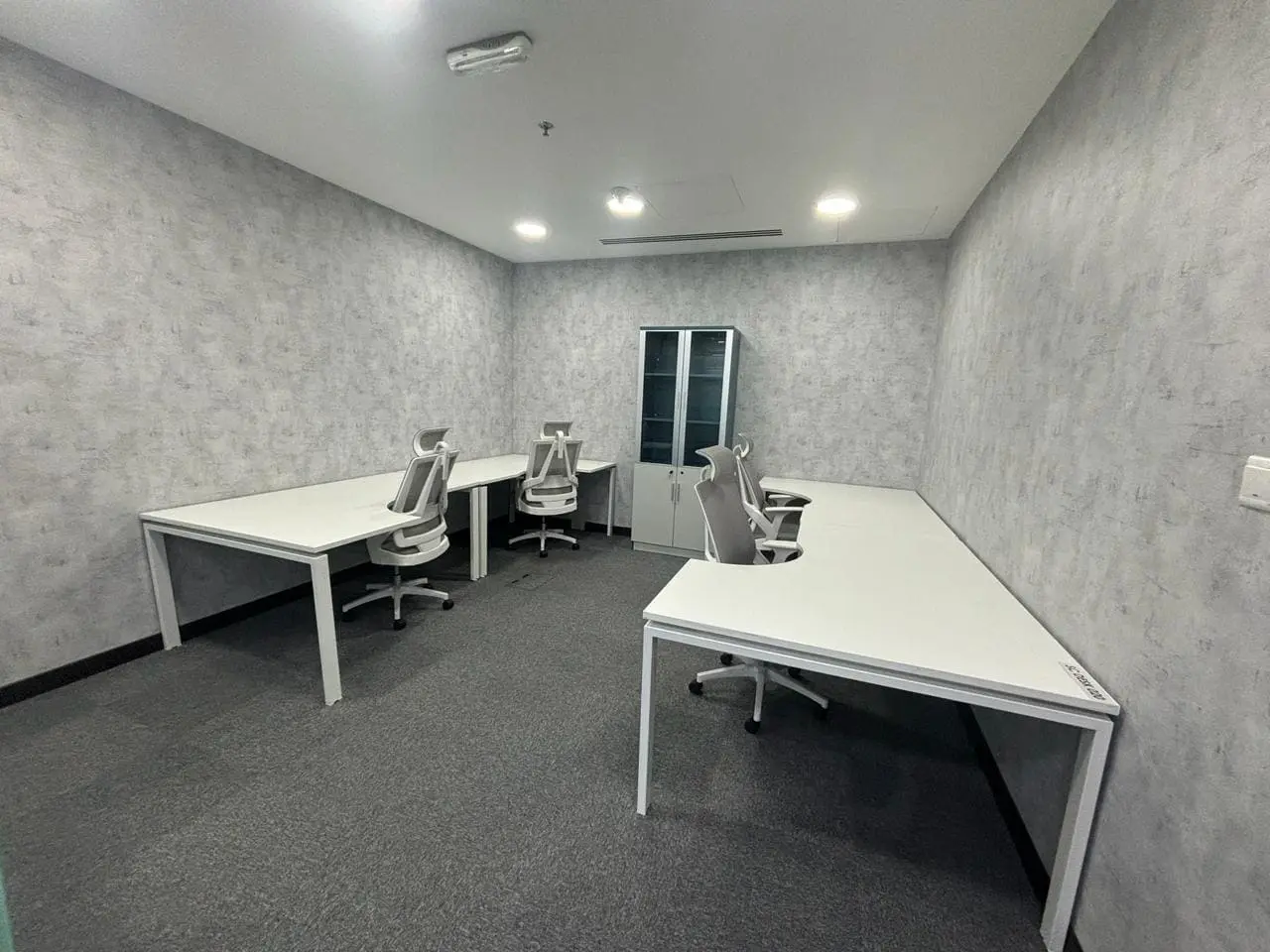
Maximizing Productivity in Coworking Spaces
A coworking space should be an enabler of work — not a source of friction. And when you decide on a well-managed center, you also get two extremely valuable resources: fast executing Wi-Fi that can handle the needs of modern business and inspirational meeting rooms to help you attract, make and close the deal.
When you’re establishing your business in Dubai, a prime location like Business Bay – enhanced by dependable connectivity and meeting room facilities – can soon be the key to success.
FAQs on “Coworking Spaces Provide Access to High-Speed Internet and Meeting Rooms”
Yes, several have business-grade high-speed internet meant for multiple users and more than just casual browsing.
Often yes—especially when the space uses separate networks and secure access methods. Still, use VPNs for sensitive tasks.
Yes. With stable connectivity and lower latency, video conferencing usually works better than in cafés or weak home setups.
Some do, particularly in private offices or dedicated desk areas. Ask during the tour.
Professional spaces typically monitor networks and resolve issues quickly. Some also maintain backup solutions.
It depends. Some plans include a set number of hours; others offer paid meeting room access by the hour.
Yes. Many spaces allow meeting room booking even if you don’t need a desk daily (depending on policies).
Most professional centers provide a screen/TV, basic connectivity options, and often whiteboards.
Some have strong sound insulation, while others reduce noise but aren’t fully soundproof. Tour and test if privacy matters.
Absolutely. In fact, interviews are one of the most common uses for private rooms.
Yes. You also benefit from excellent connections in Business Bay with good buildings and access to prime business destinations.
So make stable, high-speed internet service, room availability and privacy, location within the home (and maybe even child care and support) your top priorities — then test everything you can during peak hours.