
If you’ve spent any time driving down Sheikh Zayed Road or walking through the clusters of Business Bay, you know that Dubai is a city that loves a “statement.” For decades, that statement was usually a massive, sprawling office suite. A sea of mahogany desks and private cabins wasn’t just a place to work it was a status symbol. It told the world your company had arrived.
But walk into those same offices today at 10:00 AM on a Tuesday, and you’ll likely see a very different picture. You’ll see rows of high-end ergonomic chairs sitting empty. You’ll see “assigned” desks where the only sign of life is a dusty monitor and a lonely coffee mug.
The reality is that while our ambitions in Dubai remain massive, our need for permanent, square-meter-heavy real estate has fundamentally changed. We are currently living through the era of the “Empty Desk Tax,” where companies are bleeding capital on space they simply don’t use. If you’re a business owner or a financial controller in this city, the most effective way to boost your ROI this year isn’t by cutting your marketing budget—it’s by rethinking your floor plan.
The Problem Nobody Wants to Admit
Let’s be honest about how we actually work in 2026. Most of your top performers aren’t sitting at their desks for eight hours a day anymore. Your sales team is out in DIFC or DMCC closing deals. Your consultants are on-site with clients. Your creative teams are likely working from home two days a week to avoid the commute.
Yet, when the rent check comes due, you’re paying for 100% of that office, 100% of the time. In a city like Dubai, where commercial cooling costs alone can rival a small country’s GDP during the summer months, this is a massive financial leak.
When you factor in the base rent, the service charges, the DEWA bills, the cleaning contracts, and the “incidental” costs of maintaining a physical footprint, the price per occupied desk starts to look staggering. If you have 50 desks but only 25 are occupied on any given day, your effective rent has doubled. You aren’t just paying for an office; you’re paying for a museum of unused furniture.
Enter the Hybrid Flexi-Desk: Not a Trend, a Survival Strategy
The term “flexi-desk” used to be associated with scrappy startups or freelancers nursing a latte in a cafe. That’s no longer the case. Today, some of the most sophisticated multinational firms in the Middle East are moving toward a hybrid flexi-desk model because the math is simply too good to ignore.
The concept is straightforward: you stop assigning a specific desk to a specific person. Instead, you create a dynamic environment where people book or claim a workspace only when they actually need to be in the building.
Think about it this way: does every member of your team need a dedicated 1.5-meter slab of wood with their name on it if they are only in the office three days a week? Probably not. By moving to a 2:1 or 3:1 ratio of employees to desks, you can suddenly fit a team of 60 into an office designed for 30.
This isn’t about making the office feel crowded; it’s about making it feel alive. An office with 30 people in a 30-desk space feels energetic and collaborative. An office with 30 people in a 100-desk space feels like a dying mall.
Where the Money Actually Goes?
Let’s talk about the Return on Investment (ROI) because, at the end of the day, that’s what keeps the lights on. When you transition to a hybrid flexi-desk model, the savings hit your balance sheet from multiple angles.
First, there’s the obvious: Square footage. If you can renew your lease on a space that is 30% or 40% smaller, you’ve just handed yourself a massive annual raise. In premium Dubai districts, those savings can easily reach six figures in Dirhams.
Then, there’s the “invisible” ROI. Smaller offices mean lower utility bills. They mean fewer air conditioning units to service, fewer lightbulbs to replace, and less floor space for the cleaning crew to vacuum. It’s a leaner, greener way to run a business.
But perhaps the biggest financial win is the shift from CAPEX to OPEX. When you move into a managed flexible environment—like the ones we see popping up in Business Bay—you aren’t sinking hundreds of thousands of Dirhams into a fit-out that you’ll have to tear down in five years. You’re paying for a service. That liquidity stays in your bank account, ready to be deployed when a real business opportunity arises.
The Dubai Advantage: Infrastructure Ready for Change
Dubai is uniquely positioned to lead this shift. Unlike older European or American cities where businesses are often locked into rigid, decades-long leasing structures, Dubai’s real estate market has evolved to be incredibly agile.
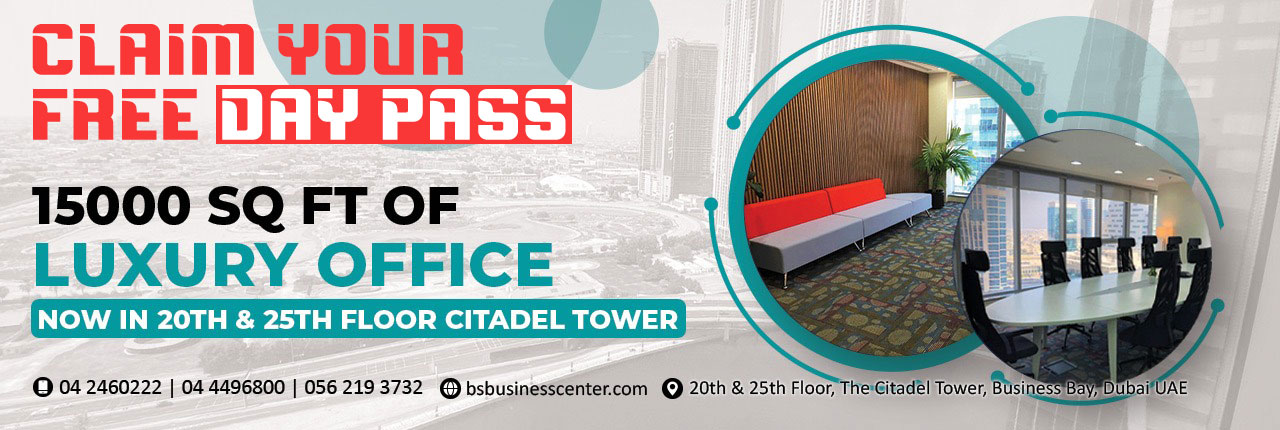
We have seen a massive rise in world-class business centers that understand this new DNA of work. Take a look at a place like BS Business Center in Business Bay. They aren’t just renting rooms; they are providing an ecosystem. They offer everything from coworking zones and private flexi-offices to high-spec meeting rooms that you can book by the hour.
For a company looking to optimize its ROI, the logic is clear: Why pay for a boardroom that you only use once a week for the Monday morning catch-up? It makes far more sense to have a smaller, highly efficient home base and then leverage the shared amenities of a premium business center when you need to “go big” for a client presentation. You can see how they’ve structured these solutions at https://bsbusinesscenter.com/.
Managing the “Human” Factor
Now, if you’re a manager reading this, you might be thinking, “My team will hate this. They want their own desks.” And you’re partially right—humans are creatures of habit. We like our photos of our kids and our specific way of arranging our pens.
But the secret to a successful flexi-desk transition is to trade “ownership” for “experience.” If you take away a private desk but replace it with a beautiful, high-tech lounge, a better coffee machine, and the freedom to work from a balcony or a focus pod, most employees will make that trade in a heartbeat.
The ROI here isn’t just in the rent; it’s in the talent. In 2026, the best employees in the UAE are looking for flexibility. They want to know that their employer trusts them to get the work done, whether they are sitting in a specific chair or not. A company that insists on 100 individual desks for 100 people often signals a culture of micro-management. A company that embraces flexi-desking signals a culture of results.
The Role of Data (The Non-Robotic Kind)
You don’t need a complex AI algorithm to figure out if your office is too big. You just need to look around. For one month, have your office manager do a “walk-through” at 11:00 AM and 3:00 PM every day. Note down how many desks are actually being used.
Most managers who do this are shocked. They realize they’ve been paying for a “full” office while running at 40% capacity. Once you have that data, the path forward becomes obvious. You can begin to shrink your footprint, upgrade your technology, and reinvest that saved capital into things that actually grow the business—like better salaries, better marketing, or better technology.
Final Thoughts: The Office of the Future is a Tool, Not a Trunk
We have to stop thinking of the office as a storage unit for people. In the modern Dubai economy, the office is a tool for collaboration. It’s a place to spark ideas, to meet clients, and to build a brand culture.
The hybrid flexi-desk model allows the office to be exactly that. It strips away the waste and leaves behind the value. By aligning your physical space with the way your team actually lives and works, you aren’t just saving money—you’re building a more resilient, more attractive, and ultimately more profitable company.
In a city that never stops moving, it’s time our offices did the same.
Would you like me to create a breakdown of the specific “per-desk” cost savings for a Business Bay office to help you back up these points with hard numbers?
FAQ
1. What is the financial benefit of a flexi-desk in Dubai? The primary benefit is eliminating the “Empty Desk Tax.” In Dubai, where cooling and rent are major overheads, a flexi-desk model allows you to pay only for the space you actually use. Companies typically see a 30% to 50% reduction in total office costs by switching from traditional leases to flexible, managed environments.
2. How do I calculate the right desk-to-employee ratio? Most modern Dubai firms find a ratio of 7 desks for every 10 employees is the “sweet spot.” By tracking peak occupancy over a two-week period, you can identify how much space sits idle. This data-driven approach ensures you aren’t overpaying for square footage that remains vacant during client meetings or remote work days.
3. Does a hybrid office model affect company culture? Actually, it often improves it. Moving away from fixed cubicles toward a flexi-desk setup encourages more movement and cross-department collaboration. When paired with high-quality shared amenities—like those at BS Business Center—employees often feel more energized by the professional, bustling atmosphere than a half-empty traditional office.
4. Are flexi-desks compliant with Dubai’s business regulations? Yes. Modern business centers in areas like Business Bay are designed to meet DED and Free Zone requirements. They provide the necessary physical address and infrastructure required for visa quotas and trade license renewals while giving you the internal flexibility to manage seating as you see fit.
5. How do flexi-desks reduce “hidden” office costs? Beyond rent, flexi-desks slash operational expenses (OPEX). You no longer bear the full burden of high-speed internet contracts, furniture maintenance, janitorial services, or the massive DEWA bills required to cool a large, traditional floor plan. These are bundled into a single, predictable monthly fee.
6. Can a flexible office setup handle high-level client meetings? Absolutely. Utilizing a managed office space gives you access to premium boardrooms and reception services that most small-to-mid-sized firms couldn’t afford on their own. It projects an image of a lean, tech-savvy, and highly successful operation to your investors and clients.
7. Is a hybrid flexi-desk model suitable for large, established firms? While startups were early adopters, large corporations in Dubai are now the biggest beneficiaries. For a firm with 50+ staff, the “Ghost Square Footage” tax is a massive drain on ROI. Scaling down the permanent footprint and utilizing on-demand workspace is a sophisticated way to de-risk the balance sheet.